Inland
Description
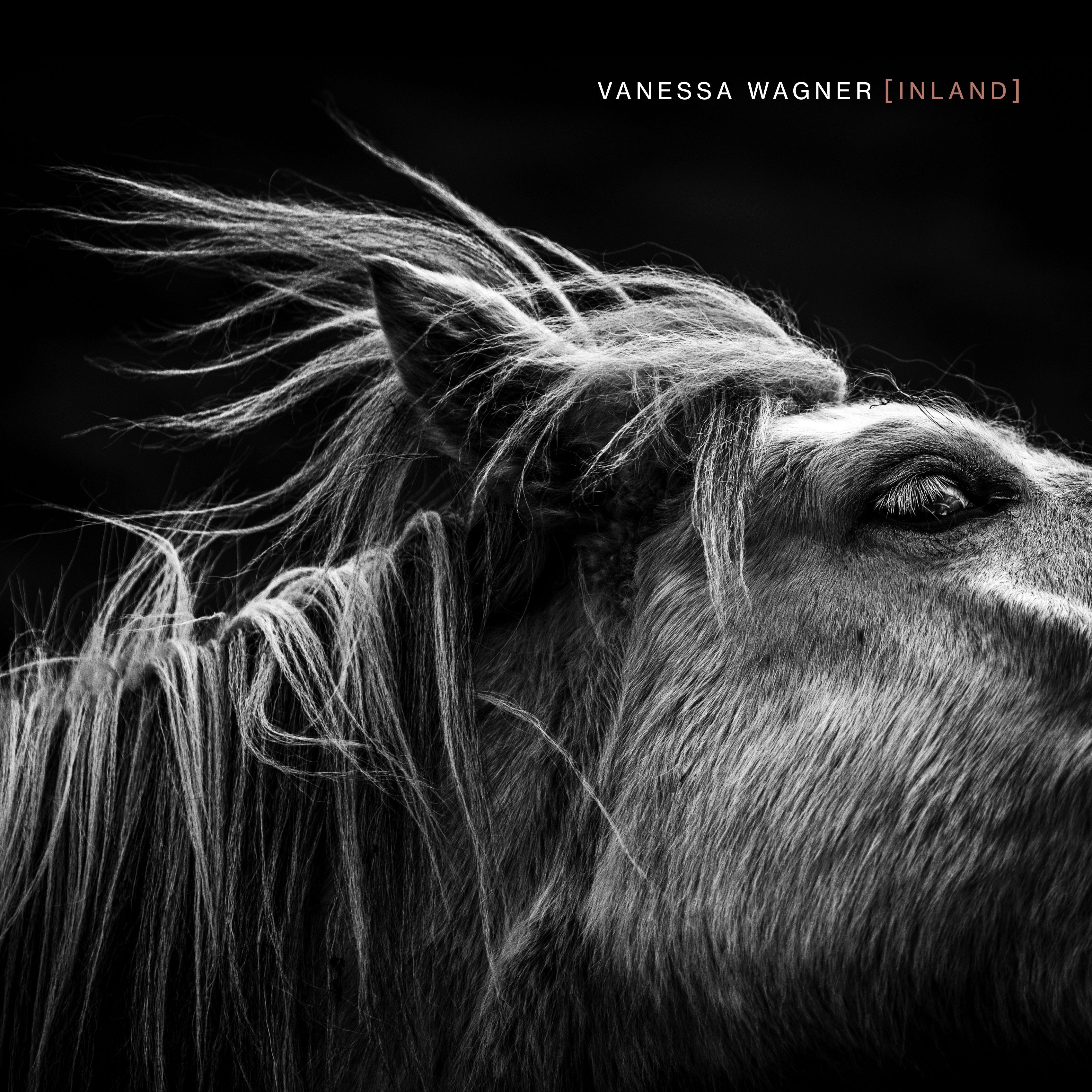
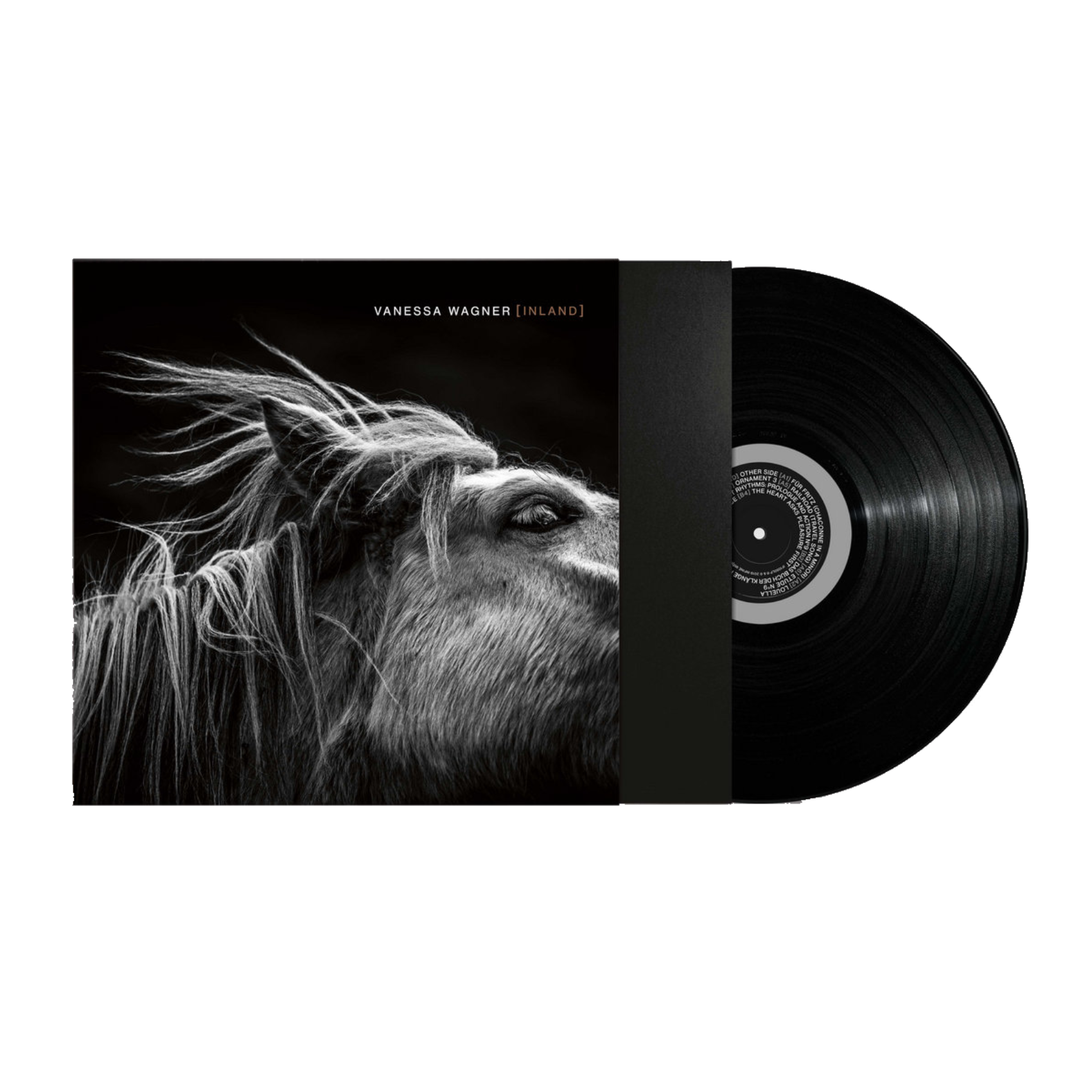
Ones enters Inland as if exploring an inner landscape, roaming freely through a gently throbbing natural world, in which each note is a step and every sound forms a path. The piano transports the listener to an island; in the middle of the clouds, in a twilight forest, a white desert, along winding or convulsing rivers, on the skull of a Fauvist mountain, in chaotic and fragile glass cities.
The title of this new album by Vanessa Wagner refers to John Cage's Imaginary Landscape (1939), one of the first works to use electronic devices. After all, when Cage wrote his manifesto The Future of Music in the late 1930s, he already knew that the merging of written and electronic music would bear exquisite fruits.
The album is the lone protuberance from 2016 album Statea, on which Wagner, alongside producer Murcof (she on the piano, him manning the machines), reinterpreted pieces from the fathers of minimalism: Arvo Pärt, Philip Glass, Morton Feldman, Erik Satie, or John Cage.
The same secret conversation between the artist, the piano, and contemporary music is now continuing on Inland. Making more with less, the album turns long harmonies into multicolored prisms, miniature detailed embroidery, sighs and breaths, syncopated or restrained chants. In this brave new world, sounds exist for themselves, and silence comes to life. While the repertoire remains in the minimalistic vein, it gives priority to living composers, of which almost all are still active.
The repertoire’s cartography has been extended: its (male or female) composers can be American, of course, but also French, Belgian, German or Latvian.
The choice of works and their sequencing was dreamed up as a sort of storytelling. Between familiar melodies and unknown rarities, the pianist dug deep to find previously unreleased pieces.
Within the cornucopia of Wagner's career, Inland stands as a hitherto unknown intimate and dream-like space. The album is both the fruit of her maturity and a new temporality that she is now exploring – a secret conversation between her spirituality and the deep connection she maintains with nature, the elements, and living matter.
The Inland journey begins with the vision of iconoclastic Moondog, who claudicates over a modest ritornello, and continues with French composer Emilie Levienaise-Farrouch's Louella, like a volatile caress. On the way, we come across familiar figures like Philip Glass, and rediscover Michael Nyman's The Heart Asks Pleasure First, as
Wagner's fingers transfigure the cult piece, rendering it with delicate sensuality.
At the origin of the source, German composer Han Otte plays entrancing magic tricks with the fluids that spring henceforth; on the horizon, the inescapable Meredith Monk draws us into his hypnotic circles; elsewhere, Bryce Dessner is takes us on an odyssey; a dream filled with characters who guide us to boundless territories, and
William Susman breaks down boundaries under the harmonic mists and mute rhythms of Quiet Rhythms.
At the end of our travels, we find a blank canvas of quiet nature, a clearing in which Latvian composer Peteris Vasks invites us to listen to the suspended silences.
When the album is over, the spirit of Inland continues to stir inside the listener's mind, in hazy reverie, clouds of nostalgia emanate from Vanessa Wagner's piano.
Tracklist
A2. Louella
A3. Ornament 2
A4. Ornament 3
B1. Etude N°9
B2. Quiet Rhythms : Prologue and Action N°9
B3. Railroad (Travel Song)
B4. The Heart Asks For Pleasure First
C1. Das Buch Der Klänge Part 2
C2. A Hudson Cycle
C3. Ramble on Cortona
C4. Elfe Dance
Avis (0)


![Figures of Glass [Piano Etudes - Edits]](http://miniwax.club/cdn/shop/files/Design_sans_titre__5.png?v=1768390042&width=3840)
![Figures of Glass [Piano Etudes - Edits]](http://miniwax.club/cdn/shop/files/Design_sans_titre_4.png?v=1768390042&width=3840)
![Figures of Glass [Piano Etudes - Edits]](http://miniwax.club/cdn/shop/files/V_Wagner_Piano_Etudes_Edits_iF3164_3400px.jpg?v=1768390042&width=3840)